
Newsletter Subscribe
Enter your email address below and subscribe to our newsletter

 ByJohn A
If you have spent any time on a renovation site in an older Queensland home, you might be wondering about the material you cut into last week. That material could easily be decades old, and asbestos exposure does not always announce itself.
On top of that, a diagnosis can surface decades after the job is finished, long after most tradies have forgotten the site altogether.
vbr Lawyers is a Queensland-based compensation law firm. The team handles asbestos disease claims, including cases involving dust diseases and related illnesses affecting tradespeople across the state.
This guide covers why exposure still happens on job sites in 2026, which tasks carry the highest risk, and the common asbestos-related diseases tradies face. It also explains the time limits that apply, and when it is worth speaking with asbestos lawyers about a compensation claim.
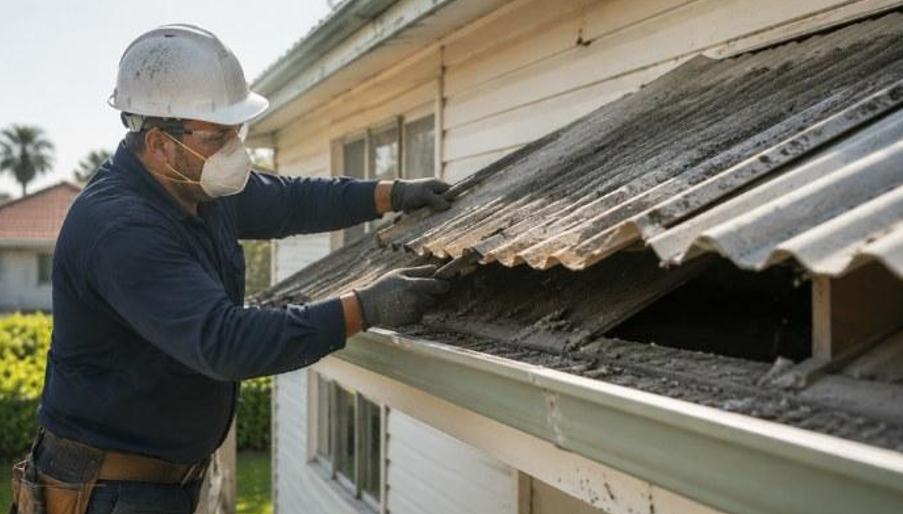
Asbestos exposure still happens because so many Queensland buildings were built before the 2003 national ban, and the material inside them has not gone anywhere. A property from that era can still have it sitting in the roof, the walls, or under the floor, and most tradies would not know just by looking.
Here is how that plays out in practice. Queensland has one of the highest counts of pre-2000s housing stock in the country. And a good chunk of it still contains asbestos in roofing sheets, wall linings, and old flooring.
So while the ban stopped new asbestos products from entering the market, it did nothing to remove what was already sitting in ceilings and garages across the state. That is why the risk has not faded the way you might expect, decades on from the ban.
You might assume this kind of exposure belongs to the old mining and manufacturing days, back when asbestos was mined and processed in bulk. But the numbers tell a different story now.
According to the Asbestos Safety and Eradication Agency, tradespeople and construction workers carrying out repairs, maintenance, and renovations on older buildings currently face the greatest risk of exposure in Australia.
In other words, the danger has shifted from the factory floor to the renovation site, and most Queensland tradies spend their working week right there. If you are pulling apart an old bathroom, replacing eaves, or knocking down a garage built in the 1970s, you are stepping into the kind of job this agency is talking about.
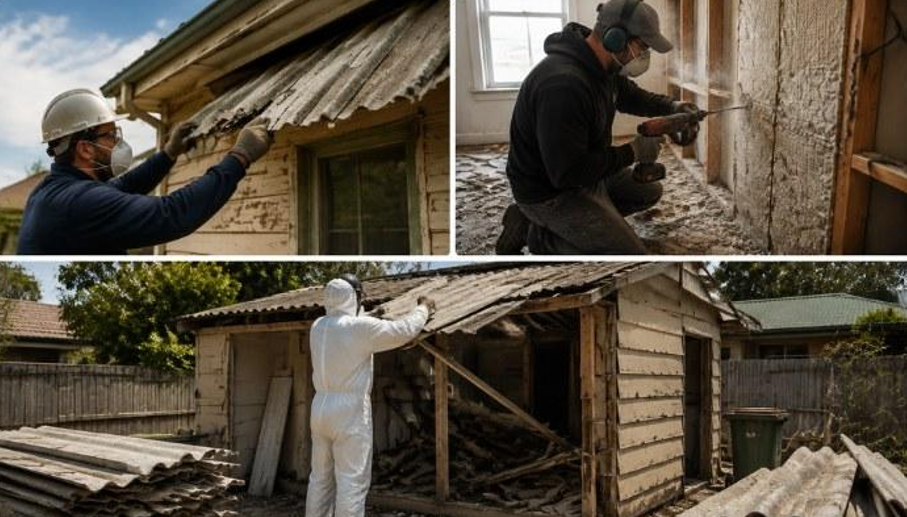
Asbestos only becomes dangerous once it is disturbed. Left alone and undamaged, it poses far less risk until the moment its fibres become airborne. So the question for any tradie is which jobs create that disturbance.
If you have cut into old fibro sheeting (fibre cement sheeting used in older homes for walls and eaves), you have likely released fibres without even seeing them. The same goes for a handful of other common tasks:
If any of these sound like jobs you have done in the past month, take note. Most tradies working on older Queensland properties have done at least one of these tasks without a second thought. The material looks the same as any other sheet or panel, so there is nothing on the surface to raise a flag.
That is the challenging part about asbestos dust. It does not look, smell, or feel any different from ordinary building dust, so there is no way to tell just from the job site.
Making an asbestos compensation claim in Queensland generally involves one of three legal pathways, and which one applies depends on how and where the exposure happened. Getting familiar with these options early makes it easier to understand what a claim actually involves.
The table below sets out how each pathway works.
| Claim Type | What It Requires | General Pathway |
| WorkCover Statutory Claim | Work-related exposure that played a significant role in the disease | Lodged directly with WorkCover Queensland, no need to prove fault |
| Common Law Claim Against Employer | Evidence that the employer’s negligence contributed to exposure | Requires establishing a breach of duty of care |
| Common Law Claim Against Manufacturer | Evidence that a product manufacturer supplied asbestos-containing materials | Involves a separate claim against the manufacturer rather than the employer |
A statutory claim skips the fault question altogether. All that is needed is proof that the exposure happened during work and played a role in the disease. A common law claim works differently again, since it requires establishing negligence on the part of the employer or manufacturer.
That distinction is what drives a more detailed legal process, with more evidence to gather and a longer path to resolution.
In some cases, a person diagnosed with an asbestos-related disease may have entitlements to pursue more than one of these pathways at once, depending on their exposure history.
Given how much this varies from one case to the next, getting advice early is worth the effort. vbr Lawyers provides advice on asbestos disease claims across Queensland, including guidance on which pathway may apply to a particular set of circumstances.
See also: ICO vs IEO vs IDO: What’s the Difference?
Time limits for asbestos compensation claims in Queensland depend on which pathway applies, and the starting point differs between the two. Getting this timing wrong can affect a person’s ability to lodge a claim at all.
For a WorkCover statutory claim, the deadline is six months from diagnosis, set out under section 131 of the Workers’ Compensation and Rehabilitation Act 2003. For asbestos-related conditions specifically, the Act treats the entitlement to compensation as arising on the day of the doctor’s diagnosis. And this sits apart from the date the exposure originally occurred. So, a worker exposed decades earlier can still lodge a valid claim once symptoms are confirmed.
The rules work differently again once you move into common law territory. Common law claims for personal injury generally carry a three-year limitation period from when the claim arises, as set out under section 11 of the Limitation of Actions Act 1974.
Asbestos disease often involves a long latency period. Because of that, how this limitation period applies can vary depending on individual circumstances. That variation is a good reason to get legal advice soon after a diagnosis.
Missing either deadline can affect what is available. But understanding the timeframe early on, ideally soon after diagnosis, puts a worker in a stronger position to protect their claim.
Asbestos exposure remains a live risk for Queensland tradies working on older buildings, and 2026 has not changed that fact. Older properties built before the 2003 ban are still the main source of that risk.
Renovation and demolition work on these pre-2003 properties continues to put tradespeople in contact with the same materials. Those materials have caused decades of asbestos-related disease across the state.
None of this is only a historical concern. Knowing which tasks carry risk and understanding the common diseases involved is part of working safely around asbestos-containing materials.
Understanding how time limits work is just as important, since the pathway that applies, WorkCover, common law, or both, depends on individual circumstances.
Get in touch with vbr Lawyers for information on asbestos disease claims and how that process works.
